Blogs
How Social Emotional Learning Supports Student Mental Health

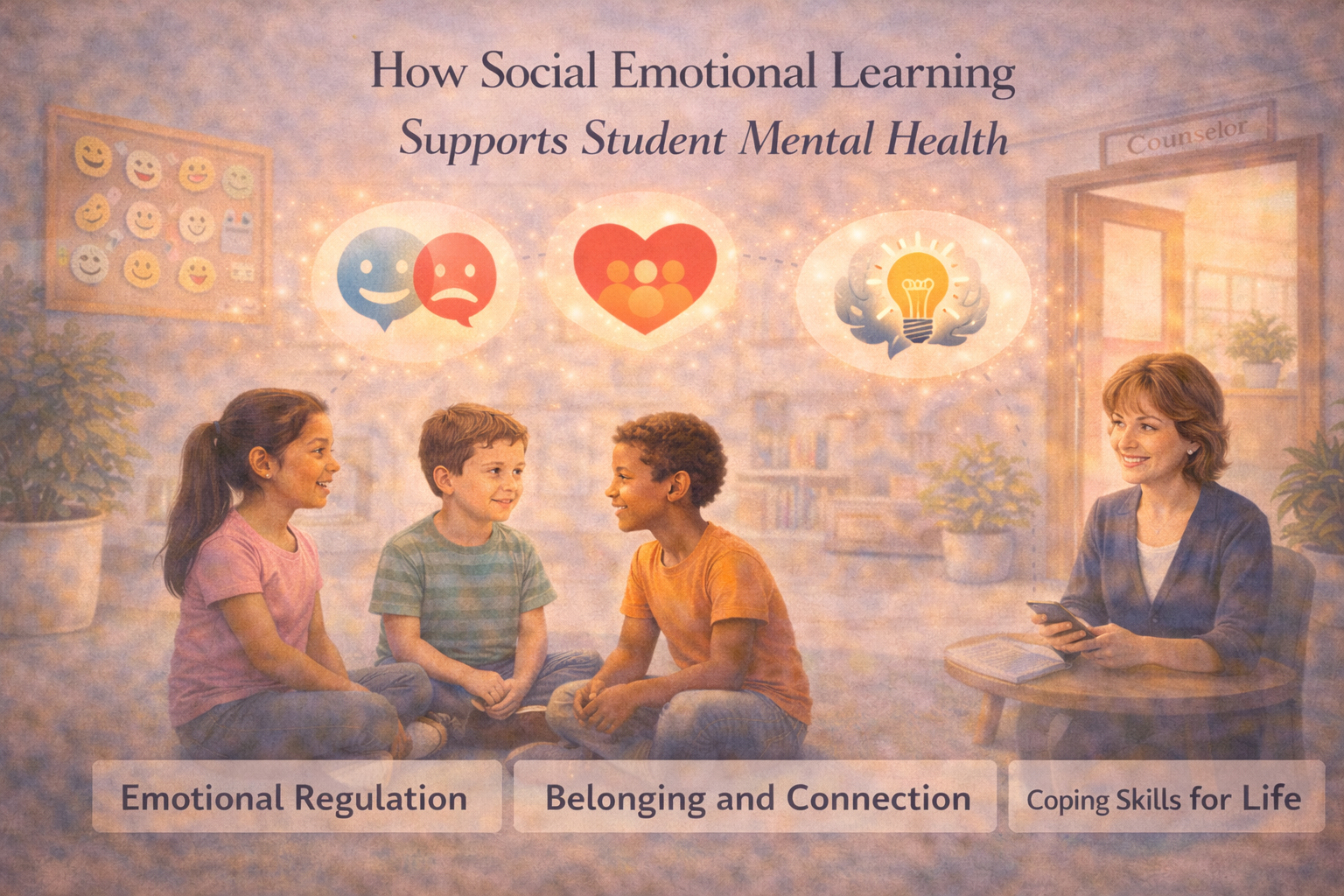
If you’ve spent any time in a classroom lately, you already know that academics are only part of the story. Students are carrying stress, anxiety, family challenges, social pressures, and sometimes grief into school every single day. When we talk about achievement, we cannot ignore what is happening beneath the surface.
That’s why understanding how social-emotional learning supports student mental health is not optional. It is essential. As a school counsellor and counselor educator, I have seen firsthand that when we intentionally teach emotional skills, we are not taking time away from learning. We are creating the conditions that make learning possible.
What Social Emotional Learning Really Means
When people ask me how social-emotional learning supports mental health, I start with clarity. Social Emotional Learning, or SEL, teaches students how to recognize emotions, regulate reactions, build healthy relationships, and make responsible decisions.
These are not “extra” skills. They are foundational mental health skills.
Students who can name what they are feeling are less likely to act it out. Students who learn coping strategies are better able to manage frustration. Students who practice empathy build stronger peer relationships. All of this directly supports mental health.
Understanding how social-emotional learning supports mental health begins with recognizing that emotional regulation is a learned skill, not a personality trait.
Emotional Regulation Reduces Anxiety and Stress
One of the clearest ways social emotional learning supports student mental health is through emotional regulation. When students experience stress, their nervous systems respond. Without tools, that stress can turn into shutdown, aggression, or withdrawal.
SEL teaches breathing techniques, self-awareness, and reflection strategies that help calm the body and mind. Over time, students build resilience. They learn that emotions are not something to fear, but something to manage.
When students feel emotionally safe, their brains are more open to learning.
SEL Builds Belonging and Connection
Mental health is deeply tied to belonging. A student who feels isolated or misunderstood is at greater risk for anxiety and depression. When schools implement SEL intentionally, they create cultures of empathy, collaboration, and inclusion.
This is another powerful example of how social-emotional learning supports student mental health. Students learn how to listen, how to resolve conflict, and how to communicate respectfully. These relational skills protect mental health long-term.
In my work, I often remind educators that connection is preventative care.
SEL Strengthens Coping Skills for Life
Life will always bring disappointment, conflict, and uncertainty. The question is not whether students will face challenges. The question is whether they will be equipped to respond.
Understanding social emotional learning and its support to student mental health means recognizing that SEL gives students coping strategies they will use well beyond school. They learn problem-solving. They learn perspective-taking. They learn how to pause before reacting. These are lifelong protective factors.
Why This Matters Now More Than Ever
We are living in a time when student mental health needs are increasing. Schools cannot become therapy centers, but they can become emotionally intelligent environments.
When we implement SEL thoughtfully, we are not replacing counseling services. We are strengthening prevention. That is how social emotional learning supports mental health in meaningful, sustainable ways.
Final Thoughts
If you care about academic growth, you must care about emotional growth. In my experience, when schools prioritize SEL, students thrive not only academically but emotionally.
Understanding how social-emotional learning supports student mental health changes how we view education. It reminds us that when we teach the whole child, we truly serve the whole child.
