

Blogs
Mental Health Awareness in Schools: Key Dates, Strategies, and Activities

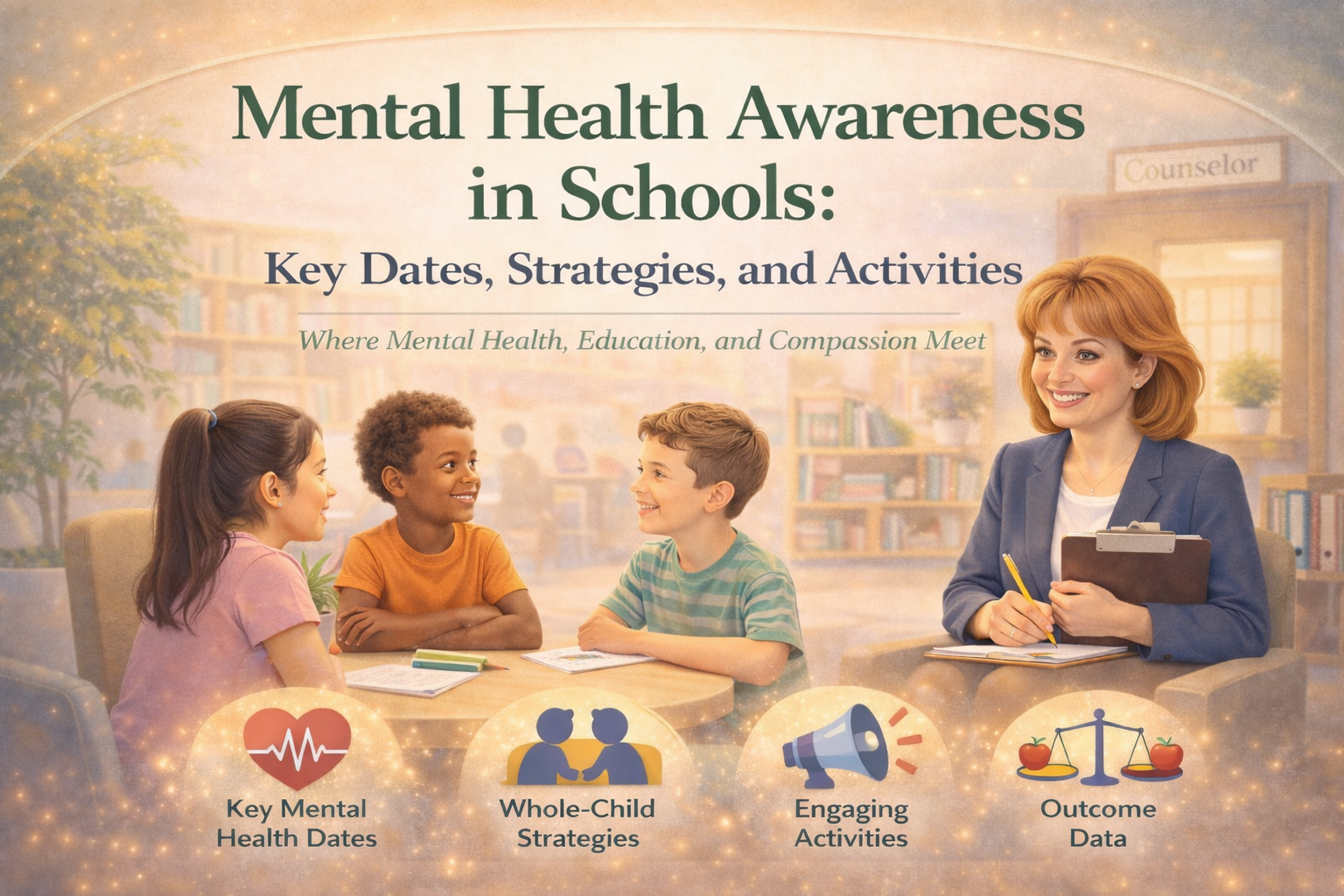
Mental health awareness in schools is not a one-time event. It is a year-round commitment to supporting the whole child. While designated awareness days and months bring valuable attention to student well-being, their true impact comes when they are intentionally integrated into a comprehensive school counseling program.
School counselors are uniquely positioned to lead this work, connecting awareness to action and ensuring that mental health support is not just visible but meaningful.
This guide brings together key dates, practical strategies, and school-based activities to help counselors build a culture of care that extends beyond awareness and into everyday practice.
Why Mental Health Awareness Matters in Schools
Students today are navigating increasing levels of stress, anxiety, and emotional complexity. Schools must respond by creating environments where:
- Students feel safe, seen, and supported
- Mental health is normalized and prioritized
- Help-seeking is encouraged, not stigmatized
Mental health awareness initiatives serve as an entry point, but the goal is deeper: Awareness should lead to action, and action should lead to lasting support.
Key Mental Health Awareness Dates for Schools
Awareness days and months provide natural opportunities to engage students, staff, and families.
🗓️ Major Awareness Opportunities:
- Mental Health Awareness Month (May)
- National School Counseling Week (February)
- World Mental Health Day (October 10)
- World Laughter Day (May)
- Suicide Prevention Awareness Month (September)
These moments can serve as anchors for programming, but they are most effective when connected to ongoing efforts.
🔗 Related Post: Mental Health Awareness Month Meets High-Stakes Testing
🔗 Related Post: World Laughter Day
Moving Beyond Awareness: A Whole-Child Approach
Using the Balanced Learner Framework, mental health awareness should connect to all aspects of student development:
- Knowledge & Skills – understanding emotions and coping strategies
- Dispositions & Mindsets – building resilience and confidence
- Social & Emotional Learning – developing relationships and self-awareness
When awareness efforts are aligned to a comprehensive model, they become part of a systemic approach rather than isolated events.
Strategies for Promoting Mental Health in Schools
School counselors can lead sustainable mental health initiatives through both direct and indirect services.
Tier 1: Schoolwide Supports
- Classroom lessons on stress management and coping skills
- Schoolwide campaigns promoting kindness, belonging, and resilience
- Visual reminders (posters, announcements, newsletters)
Tier 2: Targeted Interventions
- Small groups focused on:
- Anxiety
- Grief and loss
- Social skills
- Check-in/check-out systems for at-risk students
Tier 3: Intensive Support
- Individual counseling
- Crisis response
- Collaboration with outside mental health providers
These strategies ensure that awareness translates into real, accessible support for students.
Activities That Make Mental Health Visible and Meaningful
Awareness activities should be both engaging and purposeful.
Student-Focused Activities:
- “Take What You Need” walls (affirmations, coping strategies)
- Journaling prompts and reflection activities
- Mindfulness or breathing exercises during announcements
Schoolwide Initiatives:
- Spirit days tied to mental health themes
- Gratitude or kindness campaigns
- Peer support or student leadership groups
Family & Community Engagement:
- Parent newsletters with mental health resources
- Family nights focused on SEL and well-being
- Collaboration with community mental health organizations
The Role of the School Counselor
Mental health awareness in schools is most effective when led by school counselors who:
- Align initiatives with the ASCA National Model
- Use data to identify student needs
- Advocate for equitable access to support
- Ensure that efforts move beyond awareness to impact
School counselors help schools shift from:
❌ “We recognized Mental Health Awareness Month”
➡️
✅ “We created systems that support student mental health every day”
Connecting Awareness to Student Outcomes
True success is measured not by participation, but by impact. School counselors can evaluate mental health initiatives through:
- Process Data: Number of students reached
- Perception Data: Changes in student knowledge or attitudes
- Outcome Data: Improvements in attendance, behavior, or academic engagement
This data-driven approach ensures that awareness efforts contribute to meaningful student growth.
Final Reflection
Mental health awareness in schools is not about a single day, week, or month. It is about creating a culture where students know they matter.
When schools commit to this work:
- Students feel supported
- Stigma decreases
- Resilience grows
And most importantly: Students learn that their mental health is just as important as their academic success.
Continue Exploring
- Mental Health Awareness Month Meets High-Stakes Testing
- World Laughter Day: Promoting Joy and Connection
- High-Stakes Testing and Student Mental Health
- Supporting Students Through Grief and Loss
