



Living with Grief

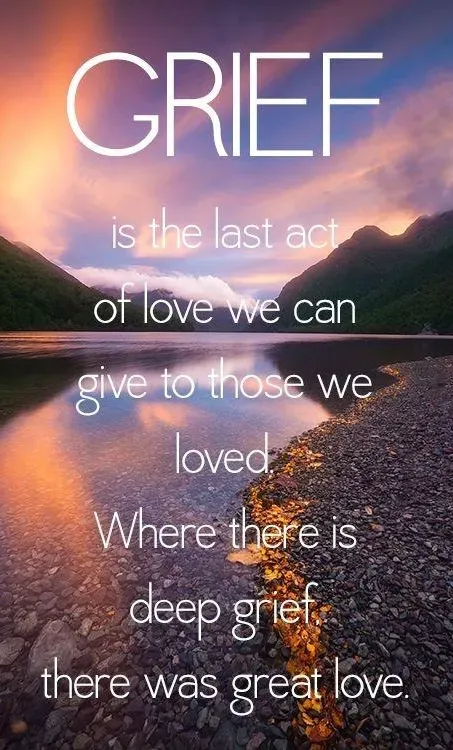
When Life Changes Forever
There are moments in life that divide our stories into before and after. Moments when the world continues turning, but the life we knew has changed forever.
For me, my most intense moment came on October 20, 2020, when my husband, Bob, went to Heaven.
I had spent more than eleven years teaching grief counseling and had experienced the loss of grandparents, aunts, uncles, and others I loved dearly. I believed I understood grief. Yet nothing in my professional preparation or personal journey could fully prepare me for the loss of the man who had been my husband, best friend, and partner through 37 years of marriage.
I discovered that understanding grief intellectually and experiencing it personally are two very different things. Moving what we may know in our head to our heart is a journey over many miles and rough terrain that takes years and diligent work to accomplish.
For five long years, Bob battled amyloidosis, a rare blood disorder. We lived with the uncertainty of his illness, holding on to hope while gradually confronting the possibility of losing the future we had imagined together. In many ways, we experienced anticipatory grief long before his death.
Near the end of his life, Bob told me he was ready. I jokingly replied that, of course, he was ready. He was going to walk on streets of gold and meet Jesus, while I would be left here without him. That was the way we interacted, even in the hardest moments. But beneath my attempt at humor was a truth I could barely comprehend. He was ready to go, and I was not ready to let him go.
In the days and months that followed, I began to understand just how many roles one person can fill in another’s life. I was surrounded by a loving and supportive family, yet I still felt the profound absence of my soulmate, my closest friend, and the person with whom I had shared the ordinary moments that make up a life together. Grief was not simply sadness. It was learning to navigate a world that looked familiar but no longer felt the same.
I came to understand that grief cannot be hurried, ignored, or neatly resolved. It demands that we acknowledge what has changed while slowly discovering how to live with what remains.
I am still learning. And perhaps that is one of the most important things grief has taught me: we do not have to stop loving, remembering, or missing someone in order to continue living. We can carry both the sorrow of their absence and the enduring gift of their love.
We do not move on from those we love. We learn to move forward with them.
Learning to Live with Grief
In the earliest days of widowhood, I desperately needed to know that I would survive what had happened to my life.
I wasn’t looking for someone to tell me that everything would be okay. I knew it wouldn’t be okay in the way I had once understood those words. My husband was gone. The life we had built together had changed forever, and there was nothing anyone could say or do to restore what I had lost.
What I needed was to hear from someone who understood. I remember how much it meant to hear from other widows who had walked this road before me. Women who understood the loneliness of an empty house, the silence where familiar conversations once lived, and the strange experience of continuing through ordinary days when nothing about life felt ordinary anymore.
They didn’t have to offer solutions. They didn’t have to explain grief or tell me how long it would last. Simply knowing that they had endured those early days and were still finding meaning in their lives gave me something I desperately needed.
They gave me hope that I, too, could learn to live with what had happened. I want to offer that same hope to someone else.
Finding Your Way in an Unfamiliar Life
One of the hardest things about losing a spouse is discovering just how much of your identity and daily life was intertwined with another person.
For 37 years, Bob was part of nearly every decision, every plan, and every vision I had of the future. We had our routines, our shared memories, our private jokes, and the quiet understanding that comes from building a life together. Then, suddenly, I was making decisions alone.
There were practical things to manage, of course. But the deeper challenges were often found in the smallest moments. Something would happen, and my first instinct would be to tell Bob. I would think of something funny and realize that the person who would have understood it best wasn’t there to laugh with me.
I recognized, all too soon, that it wasn’t the extraordinary moments that hurt the most. It was the ordinary ones.
I began to understand that grief wasn’t simply missing the person I loved. It was also grieving the life we had shared, the future we had imagined, and the parts of myself that had existed within our relationship.
Learning to live with grief meant learning to navigate a world that was familiar in appearance but profoundly different in experience.
Moving Forward Doesn't Mean Leaving Love Behind

In the beginning, I struggled with the idea of moving forward. It seemed almost disloyal, as though finding moments of happiness or building a different life might somehow diminish the love Bob and I had shared.
Over time, I began to understand something important. Moving forward doesn’t mean moving on from the person we love. It doesn’t mean forgetting, replacing, or closing a chapter as though that person were no longer part of our story. It means learning to carry that love into a life that continues, even when we wish it could have remained as it was.
There are still difficult days. There are moments when his absence feels as profound as it did in the beginning. There are milestones I wish we could celebrate together and ordinary experiences I wish I could share with him. But there is also laughter. There is family. There are new memories, unexpected joys, and opportunities to love and serve others.
I am learning that these experiences can exist together. We can miss someone deeply and still find reasons to smile. We can grieve what was lost while remaining grateful for what remains.
A Word to Someone Walking This Road
If you are in the earliest days of grief, I wish I could sit beside you and simply listen. I wouldn’t tell you that I know exactly how you feel, because every relationship and every experience of loss is different. But I would tell you that I remember the bewilderment of those first days. I remember wondering how life could possibly continue when the person who had been at the center of mine was no longer beside me. I would tell you that you don’t have to figure out the rest of your life today.
You don’t have to be strong every moment. You don’t have to meet anyone else’s expectations about how grief should look or how quickly you should adjust. And you don’t have to stop loving the person you’ve lost in order to continue living.
I cannot promise that the road ahead will be easy. I cannot tell you when the hardest days will come or when they will begin to feel less overwhelming. But I can tell you that a life profoundly changed by loss can still hold love, meaning, purpose, and hope.
I am still learning that myself. And if sharing what I’ve experienced helps even one person feel a little less alone, then perhaps something meaningful can grow from the hardest journey I have ever walked.
We don't move on from those we love. We learn to move forward with them.
Continue the Journey
Living with grief is a journey of love, remembrance, and learning to move forward. Explore personal stories and reflections on the everyday realities of loss, the love that remains, and the hope we discover along the way.