Whole-Child Development

Welcome to Whole-Child Development
Education is about more than the knowledge students acquire or the academic milestones they achieve. Every learner brings a developing sense of identity, relationships, emotions, experiences, strengths, and aspirations into the classroom. These dimensions of development influence not only how students learn, but also how they understand themselves and engage with the world around them.
A whole-child approach recognizes that academic, social, emotional, and personal development are interconnected. Students benefit when schools attend to their need for belonging, support the development of confidence and resilience, nurture positive relationships, and provide meaningful opportunities to grow.
Supporting the whole child means recognizing that learning and development are not separate responsibilities. They are interconnected parts of education's purpose.
School counselors contribute an essential developmental perspective to this work. Through comprehensive school counseling programs, classroom instruction, responsive services, collaboration, and advocacy, they help students develop the knowledge, skills, attitudes, and dispositions needed to navigate challenges and pursue meaningful goals.
This perspective also calls us to look beyond isolated interventions. Whole-child development is strengthened when educators intentionally connect academic learning with social-emotional competencies, character, relationships, and opportunities for reflection and growth.
The articles in this journal explore three complementary reading paths: understanding the whole learner; strengthening belonging, confidence, and resilience; and translating developmental principles into everyday educational practice.
Throughout these discussions, one principle remains central: We do not serve students well by focusing only on what they know. We must also attend to who they are becoming and the conditions that help them flourish.
Explore the Reading Paths
Understanding the Whole Learner
Explore the interconnected dimensions of student development, including social-emotional learning, emotional intelligence, and whole-child approaches.
Belonging, Confidence & Resilience
Discover how relationships, positive self-perception, and supportive experiences help students develop confidence and navigate challenges.
Putting Development into Practice
Consider how intentional social-emotional learning and developmentally responsive strategies support students in classrooms and schools.
The School Counselor's Role in Understanding the Whole Learner
Recognizing Development. Connecting Learning. Nurturing Potential.
Understanding students as whole learners provides the foundation for intentional educational practice.
Students do not develop academically, socially, and emotionally in isolation. Their ability to learn, form relationships, make decisions, and respond to challenges reflects the interaction of multiple developmental influences.
Social-emotional learning, emotional intelligence, and whole-child approaches help educators recognize these connections. They offer ways to understand how students develop self-awareness, manage emotions, build relationships, demonstrate responsibility, and engage meaningfully in learning.
For school counselors, this developmental perspective is essential. It informs classroom instruction, individual and group interventions, collaboration with educators, and efforts to create supportive school environments.
The articles in this reading path explore foundational concepts that help us understand the whole learner and recognize why effective education must attend to more than academic performance.
When we understand the whole learner, we are better prepared to support meaningful growth.
01 · Understanding SEL
Explore the foundational concepts of social-emotional learning and their relevance to students' relationships, decision-making, and development.
02 · Developing Emotional Intelligence

Consider how school counselors support students in recognizing emotions, developing self-awareness, and strengthening interpersonal skills.
03 · Seeing the Whole Child

Examine a comprehensive perspective on student development that recognizes the connections among learning, emotional well-being, relationships, and personal growth.
Continue Exploring
Article
Contribution
Understanding social-emotional learning as a developmental approach rather than simply a behavior-management strategy.
Belonging, Confidence & Resilience
Strengthening Identity. Building Connections. Supporting Growth Through Challenges.
Students grow when they experience belonging, develop confidence, and discover their capacity to navigate challenges.
A student's developing sense of self is influenced by relationships, experiences, expectations, and the messages received from others. Positive connections and opportunities for meaningful participation can help students recognize their strengths, develop confidence, and build a sense of belonging.
Resilience is also an important dimension of development. It does not mean that students should face difficulties alone or that successful students are unaffected by hardship. Rather, resilience develops through supportive relationships, opportunities to practice coping skills, and experiences that help students approach challenges with growing confidence.
School counselors support this development by promoting healthy relationships, strengthening protective factors, addressing concerns such as peer pressure and negative self-perception, and collaborating with families and educators to create environments where students feel valued.
The articles in this reading path examine the experiences and relationships that influence student identity, confidence, belonging, and resilience.
Our goal is not to shield students from every challenge, but to help them develop the relationships, skills, and support systems that make growth possible.
01 · CULTIVATING RESILIENCE
Explore how supportive relationships, coping strategies, and opportunities for growth can help students develop resilience as they navigate uncertainty and change.
Continue Exploring
Article
Contribution
Supporting the development of student identity, confidence, and personal strengths.
Recognizing the influence of supportive adult relationships on student development.
Strengthening collaboration between families and school counselors during adolescence.
Helping students navigate social influences and develop thoughtful decision-making skills.
Exploring the relationship between students' self-perception, confidence, and development.
Considering how encouragement, relationships, and social messages influence students' self-image.
Recognizing developmental influences on self-image and supporting healthy self-perception.
Reading Path Three
Putting Development into Practice
Connecting Principles. Creating Opportunities. Supporting Everyday Growth.
Whole-child development becomes meaningful when our educational practices reflect what we know about how students learn and grow.
Understanding student development is essential, but understanding alone does not create change. Educators and school counselors must translate developmental principles into intentional experiences that strengthen students' knowledge, skills, relationships, and capacity for responsible decision-making.
Social-emotional learning provides one important avenue for this work. When thoughtfully integrated into classroom instruction, school counseling programs, and schoolwide practices, it can help students develop competencies that support learning, relationships, and emotional well-being.
Effective implementation also requires collaboration. School counselors contribute developmental expertise, while teachers, administrators, families, and other professionals help create consistent opportunities for students to practice and apply what they are learning.
The articles in this reading path explore practical connections between social-emotional learning, academic engagement, student behavior, and well-being.
Development is not simply something we observe in students. It is something we intentionally support through the experiences and environments we create.
01 · CONNECTING SEL & LEARNING
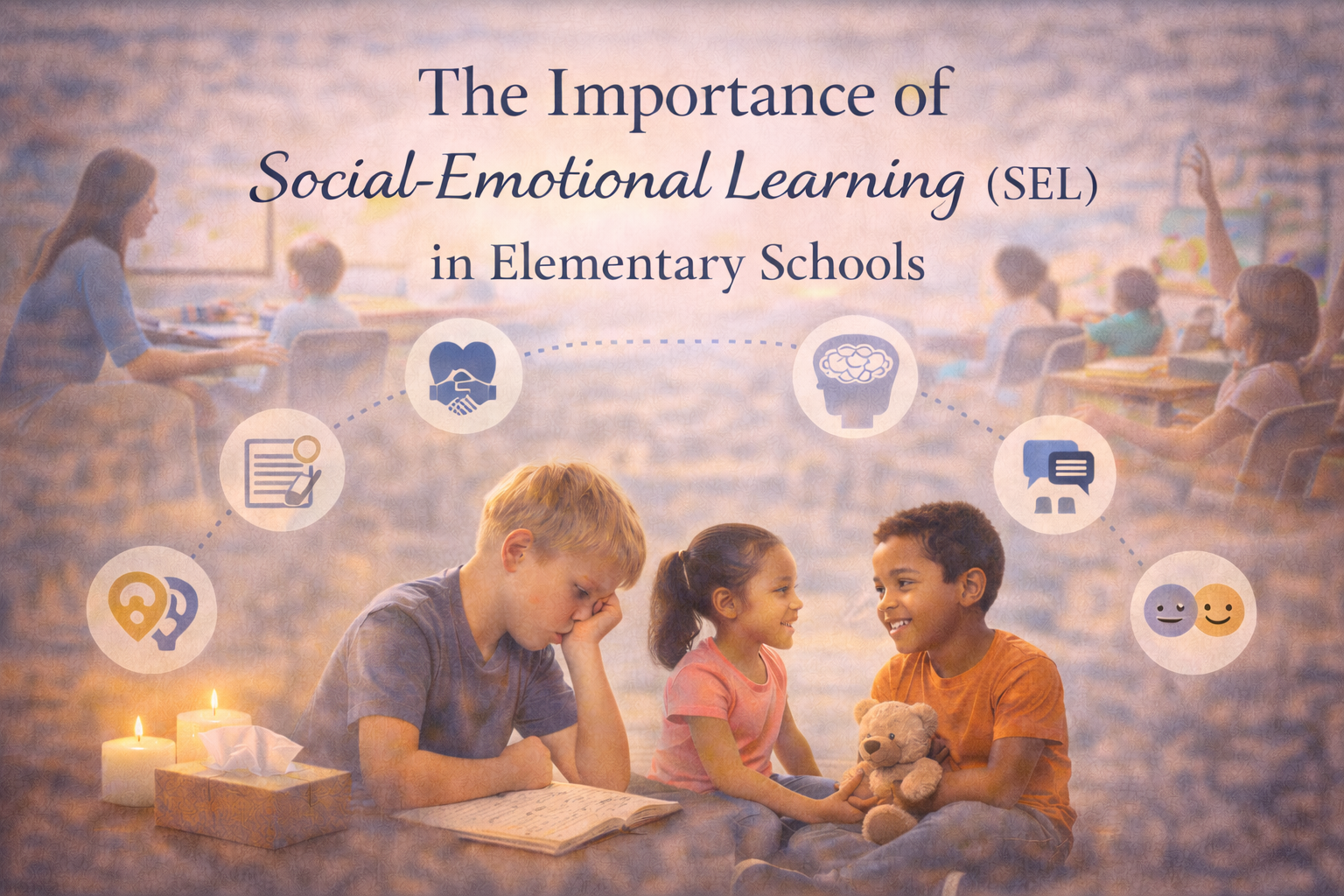
Explore how social-emotional learning in elementary schools can strengthen students' developmental competencies and contribute to supportive conditions for academic engagement and success.
Continue Exploring
Article
Contribution
Connecting educator preparation in social-emotional learning with supportive classroom practices.
Exploring the relationship between social-emotional competencies, protective factors, and student well-being.
How the Three Reading Paths Fit Together
Understand
The developing learner
Nurture
Belonging and resilience
Apply
Intentional practices