Current Issues in Schools

Welcome to Current Issues in Schools
Schools continually respond to changing policies, social expectations, educational priorities, and the evolving needs of students. For school counselors, these changes bring both challenges and opportunities to demonstrate the value of ethical, student-centered practice.
Navigating contemporary issues requires more than awareness of current events. It calls for an understanding of professional responsibilities, thoughtful consideration of competing perspectives, and a commitment to protecting students' access to appropriate educational and counseling services.
Educational issues may change, but our professional responsibility to students remains constant.
School counselors must be willing to examine complex issues, consider differing perspectives, and respond with integrity. Our decisions should be grounded in professional ethics, informed by evidence, and guided by what best serves students—not by political pressure, convenience, or competing agendas.
Current Issues in Schools examines selected challenges facing school counselors, including educational policy and ethics, political and social change, high-stakes testing, and advocacy for the appropriate use of school counseling professionals.
The articles in this collection encourage readers to examine complex questions through the lens of professional principles rather than political positions. They emphasize informed decision-making, respectful engagement, and collaboration among school counselors, educators, families, and communities.
The three reading paths move from the ethical foundations that guide professional decisions, to the challenges of navigating change, and finally to the responsibility of advocating for students and the integrity of school counseling services.
Explore the Reading Paths
Professional Ethics & Policy
Examine the ethical responsibilities and professional considerations that guide school counselors when educational policies affect students.
Navigating Political & Social Change
Explore how school counselors can respond thoughtfully to political, cultural, and social developments while maintaining student-centered professional responsibilities.
Assessment, Testing & Advocacy
Consider the consequences of high-stakes testing, the appropriate responsibilities of school counselors, and advocacy that protects access to student services.
Educational policies and decisions can raise complex ethical questions for school counselors, particularly when institutional priorities, family perspectives, and student needs intersect.
Professional ethics provide an essential foundation for navigating these questions. They help school counselors consider competing responsibilities, recognize potential consequences, and make informed decisions that preserve the dignity, well-being, and educational opportunities of students.
This reading path examines the relationship between educational policy and professional responsibility, emphasizing the importance of thoughtful judgment and student-centered practice.
01 · Ethical Responsibility

Examines the ethical considerations surrounding school choice, including equitable access to information, respect for family decisions, and the responsibility to provide balanced, student-centered guidance.
Schools do not exist apart from the communities and societies they serve. Political developments, cultural shifts, changing social expectations, and public debates inevitably influence the experiences of students, families, and educators.
For school counselors, these circumstances can present complex challenges. Students may arrive at school carrying uncertainty, conflicting messages, concerns about belonging, or questions shaped by conversations taking place at home and throughout their communities. Supporting students through these experiences requires sensitivity, professional judgment, and respect for differing perspectives.
The school counselor's responsibility is not to promote a particular political position, but to ensure that students are treated with dignity, have access to appropriate support, and feel safe expressing concerns within the boundaries of professional practice. This responsibility includes helping students develop respectful communication, critical thinking, empathy, and the ability to navigate differences constructively.
This reading path explores how school counselors can respond to political, cultural, and social change while remaining grounded in ethical principles and focused on the academic, social, and emotional well-being of every student.
01 · NAVIGATING CHANGE

Explores how school counselors can help students navigate political, cultural, and social change through ethical practice, respectful dialogue, and student-centered support.
02 · HISTORY & BELONGING

Considers how schools can acknowledge America's historical foundations while recognizing the diverse backgrounds and experiences of today's students, emphasizing respect, belonging, and thoughtful professional practice.
03 · POST-ELECTION RESPONSIBILITIES

Examines the school counselor's responsibilities following a presidential election, with attention to students' differing reactions, respectful school environments, and continued commitment to professional responsibilities.
Continue Exploring
Article
Contribution
Examines how school counselors can respond to changing diversity-related policies while maintaining ethical responsibilities and supporting students.
Considers the school counselor's role during political transitions, emphasizing student support, respectful dialogue, and professional judgment.
Reading Path Three
Assessment, Testing & Advocacy
Protecting Student Well-Being and Professional Purpose
Assessment and accountability are important components of educational practice. Schools rely on assessment data to understand student learning, identify areas for improvement, and make informed instructional decisions. Yet the growing emphasis on high-stakes testing also raises important questions about student well-being, educational priorities, and the appropriate use of school counseling professionals.
For students, testing can bring pressure, uncertainty, and concerns about academic performance. For school counselors, assessment periods may create competing expectations, particularly when responsibilities for coordinating or administering tests interfere with the delivery of counseling services.
These challenges call for thoughtful professional advocacy rather than opposition to assessment itself. School counselors can support responsible assessment practices while helping school leaders recognize the importance of maintaining access to academic, career, and social/emotional counseling services.
This reading path examines the intersection of assessment, student mental health, and professional responsibilities. The articles encourage school counselors to use evidence, collaboration, and ethical judgment to advocate for practices that support student success without compromising the integrity of comprehensive school counseling programs.
01 · STUDENT WELL-BEING
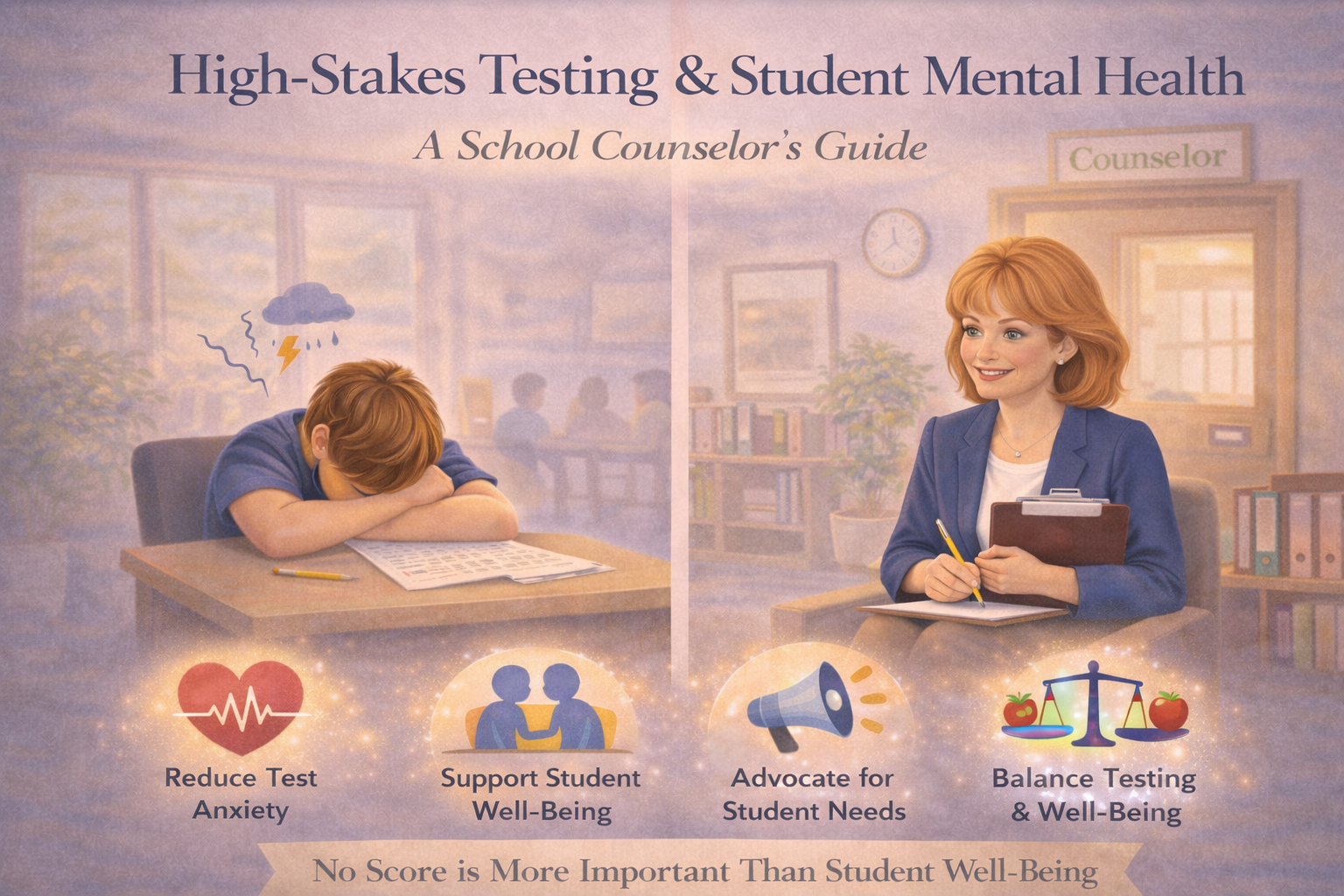
Examines the relationship between high-stakes testing and student mental health, offering considerations for reducing unnecessary pressure and supporting student well-being while maintaining educational accountability.
02 · PROFESSIONAL RESPONSIBILITY

Explores the professional responsibilities of school counselors during assessment periods, emphasizing the importance of protecting access to counseling services and advocating for the appropriate use of school counseling personnel.
Continue Exploring
Article
Contribution
Considers the limitations of relying too heavily on high-stakes assessments and advocates for a broader understanding of student success.
Reflects on the tension between promoting mental health awareness and the pressures students experience during testing season.
Examines how assigning school counselors testing-related duties can reduce students' access to essential counseling services.
Explores the challenges created when school counselors assume assessment coordination responsibilities that compete with their professional role.
How the Three Reading Paths Fit Together
Ground
Ethics and professional principles
NAVIGATE
Political and social change
Advocate
Student needs and professional purpose