SCHOOL COUNSELING TODAY
RESEARCH • PRACTICE • WHOLE CHILDREN
SCHOOL COUNSELORS: THE FIRST RESPONDERS IN SCHOOL CRISES
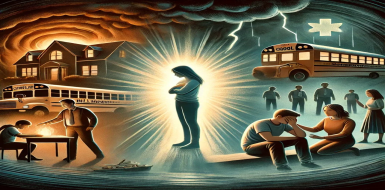
Providing Immediate Emotional Support Within a Coordinated Crisis Response
When we think about first responders, we often picture police officers, firefighters, and emergency medical personnel rushing to the scene of a crisis. But within the walls of a school, another professional may be among the first to respond to students’ emotional and psychological needs: the school counselor.
Whether a student is experiencing a family tragedy, disclosing thoughts of suicide, or coping with the aftermath of violence or a natural disaster, school counselors bring specialized knowledge of student development, crisis intervention, and school-based mental health support.
Their responsibilities differ from those of emergency personnel. School counselors do not replace emergency responders or independently manage school safety operations. Instead, they provide essential mental health expertise within a coordinated school crisis-response system.
In schools where administrators understand and appropriately utilize that expertise, counselors can help students navigate difficult experiences while connecting them with the support they need.
Specialized Training in Crisis Intervention
Professional preparation in school counseling includes understanding student development, mental health concerns, ethical responsibilities, and responsive counseling practices. Crisis prevention and intervention are important dimensions of this preparation, although specific training and competencies vary.
Effective crisis response also requires ongoing professional development, familiarity with school and district emergency plans, and collaboration with professionals whose responsibilities and expertise complement those of the school counselor.
During a crisis, school counselors may help identify students requiring immediate emotional support, provide developmentally appropriate interventions, communicate with families, and connect students to additional services.
When a student presents an immediate safety concern, including possible suicide risk, school counselors follow established procedures, involve appropriate personnel, and take necessary steps to protect the student. Their role is not to provide a definitive clinical assessment or manage an emergency independently.
Preparation matters because students need more than a caring adult in difficult moments. They need professionals who understand how to respond appropriately, ethically, and within a coordinated system of care.
Managing High-Pressure Environments
Crises create uncertainty. Students may experience fear, confusion, anger, or grief, while educators and families seek reassurance and direction.
School counselors can provide a steady, compassionate presence during these circumstances. Their knowledge of student development, communication, and emotional regulation can help them respond to students’ immediate needs while remaining attentive to the broader school environment.
They may also contribute to conflict prevention and resolution when circumstances are appropriate and safety has been established.
However, effective crisis response does not depend on one individual remaining calm or assuming responsibility for every aspect of an emergency. It depends on preparation, clearly defined responsibilities, and coordinated action among school personnel and community responders.
School counselors are most effective when their mental health expertise is incorporated into established crisis-response procedures rather than diverted to duties outside their professional role.
Support During and After Critical Events
A crisis does not necessarily end when the immediate danger has passed. Students and staff may continue experiencing emotional reactions that influence their relationships, behavior, attendance, and engagement in learning.
School counselors help schools recognize and respond to these needs. Depending on the circumstances, they may provide brief individual counseling, facilitate appropriate opportunities for students to express concerns, consult with educators, and assist families in identifying additional resources.
Responses should be sensitive to students’ developmental levels, cultural backgrounds, individual experiences, and preferences. Not every student will need the same intervention, and no student should be pressured to discuss a traumatic experience before they are ready.
Some students may require specialized mental health services beyond what a school counseling program can provide. In those situations, school counselors help families understand available options and coordinate appropriate school-based follow-up.
Their contribution is not measured by whether they can resolve every emotional consequence of a crisis. It is reflected in their ability to recognize needs, provide appropriate support, and help sustain connections to care.
Peace of Mind for Families and School Communities
Families want to know that schools are prepared to protect and support their children when unexpected events occur.
An effective school crisis-response system includes trained personnel, clear procedures, established communication channels, and access to appropriate resources. School counselors are important members of that system because they understand the relationship between student mental health, school connectedness, and learning.
Their work is strengthened through collaboration with administrators, school psychologists, social workers, nurses, school resource officers, emergency responders, and community mental health professionals.
Just as importantly, administrators must understand how to utilize school counselors appropriately. Assigning them responsibilities unrelated to their professional expertise can limit their availability to students when their counseling skills are most needed.
Families can take reassurance in knowing that their school has a coordinated plan and that school counselors are prepared to contribute their specialized knowledge to its implementation.
Supporting Recovery and Resilience
Students respond to difficult experiences in different ways. Some may return to familiar routines relatively quickly, while others may experience ongoing distress or need additional support.
School counselors can help identify emerging concerns, strengthen protective relationships, support students’ coping skills, and collaborate with families and educators to create supportive conditions for learning.
They also help school communities recognize when additional intervention is necessary. Early identification, appropriate referrals, and coordinated follow-up can improve access to care, although no single intervention can guarantee that a student will avoid lasting effects from trauma.
Recovery is not always linear, and resilience does not mean the absence of pain. For many students, healing involves time, meaningful relationships, professional support when needed, and the opportunity to regain a sense of safety and connection.
School counselors contribute to that process by helping ensure that students’ needs remain visible long after the immediate crisis has passed.
School Counselors Are the Quiet Heroes
In times of crisis, much of a school counselor’s most important work may occur outside the spotlight: listening to a frightened student, helping a family identify appropriate resources, supporting an educator who is concerned about a child, or collaborating with a crisis-response team to plan the next steps.
These contributions may not resemble the highly visible actions we associate with traditional first responders. Yet they are essential to a school community’s response to difficult circumstances.
School counselors cannot prevent every tragedy, eliminate every emotional consequence, or provide every service a student may need. What they can do is bring professional knowledge, compassion, preparation, and a commitment to student well-being into moments when those qualities matter profoundly.
When a crisis occurs, school counselors are not expected to carry the entire response. They are expected to bring their professional expertise to it.
And when schools recognize and protect that role, students and families are better positioned to receive the understanding, connection, and appropriate support they deserve.
Professional References
American School Counselor Association. (2025a). The school counselor and safe schools and crisis response [Position statement]. https://www.schoolcounselor.org/Standards-Positions/Position-Statements/ASCA-Position-Statements/The-School-Counselor-and-Safe-Schools-and-Crisis-R
American School Counselor Association. (2025b). The school counselor and suicide risk assessment [Position statement]. https://www.schoolcounselor.org/Standards-Positions/Position-Statements/ASCA-Position-Statements/The-School-Counselor-and-Suicide-Risk-Assessment
CONTINUE EXPLORING COUNSELING TODAY
Explore more research-informed ideas, practical resources, and professional learning for supporting students and strengthening school counseling practice.
ARTICLES
Read perspectives, practical guidance, and ideas for strengthening school counseling practice.
PROFESSIONAL LEARNING LIBRARY
Explore frameworks, tools, research, and learning resources.
COUNSELING TODAY
Return to Counseling Today to explore professional learning, signature resources, and more.