



Profoundly Changed
Moving forward with love…
GRIEF REFRAMED: LIVING YOUR JOURNEY, NOT SOMEONE ELSE’S
Something we often forget is that Elisabeth Kübler-Ross’s familiar five stages—denial, anger, bargaining, depression, and acceptance—were originally described in her work with people facing their own deaths. They were not intended to prescribe a sequence that everyone must follow after losing someone they love.
Yet somewhere along the way, these stages became widely understood as a roadmap for grief. People began expecting themselves, and sometimes others, to move through particular emotions and eventually arrive at acceptance. But grief doesn’t work that way.
When we recognize that the five stages were never meant to be a universal checklist for bereavement, we can begin to reconsider what it means to be “stuck.” Wrestling with the enormity of loss isn’t necessarily a failure to heal. Sometimes, it’s simply part of learning to live with a reality we never wanted.
Grief Defies Neat Categorization
While Kübler-Ross’s stages offer a way to describe certain emotional responses, grief is deeply personal. It is shaped by the relationship we shared with the person who died, our experiences, our beliefs, the circumstances surrounding the loss, and the way we process loss.
Some people experience anger, while others may not. Some feel relief alongside sadness. Others find themselves moving between disbelief, longing, gratitude, and overwhelming sorrow, sometimes within the same day.
There is no requirement to experience every stage, and there is no prescribed order in which emotions must appear. Grief isn’t a straight line. It changes as we change, sometimes becoming quieter and sometimes returning with an intensity that catches us completely off guard.
Recognizing this allows us to approach our own grief, and the grief of others, with greater compassion.
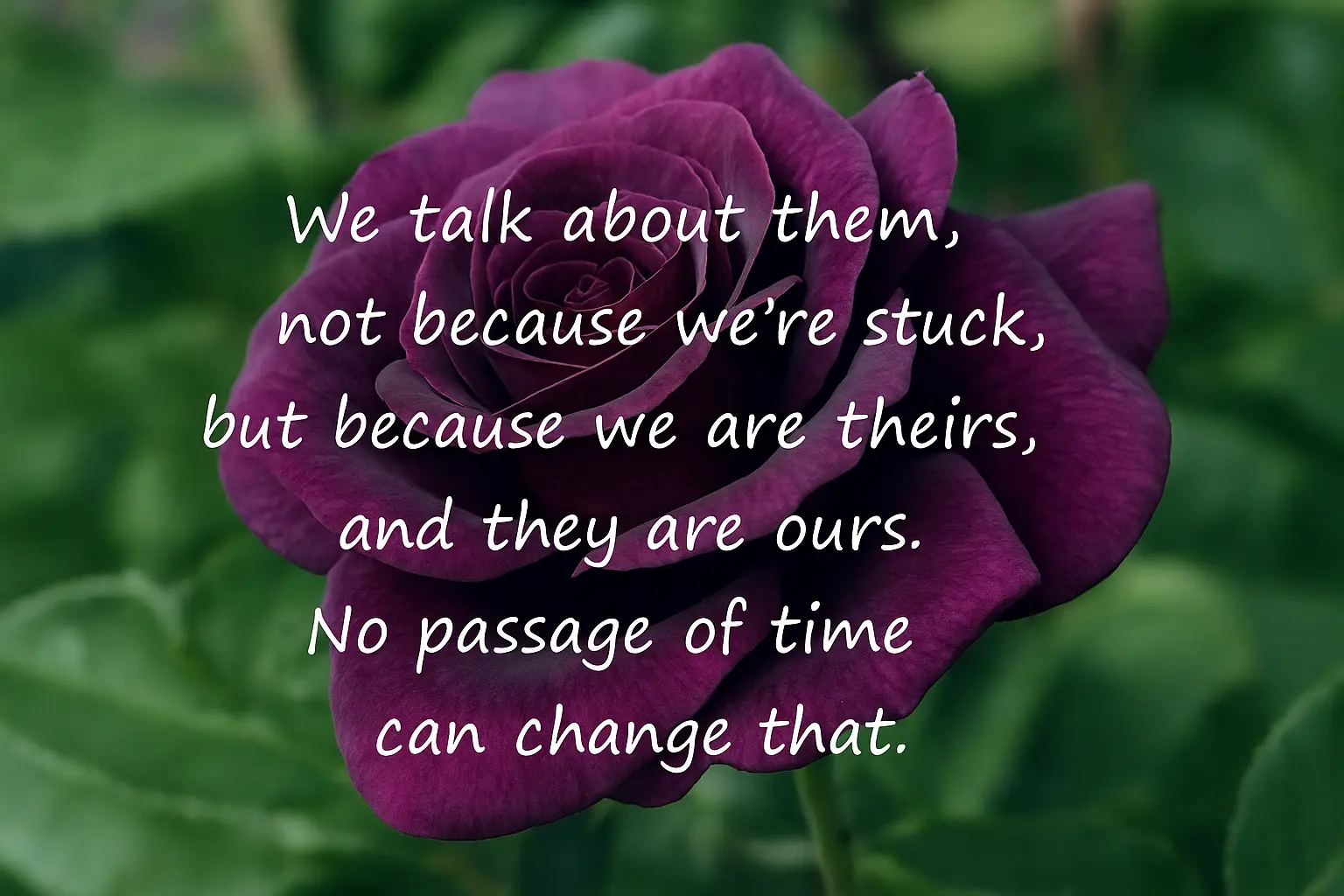
You Are Not Stuck; You Are Carrying Love
One of the hardest parts of grieving is the perception, often from others, that we are “stuck.” Comments like “You need to move on” or “It’s time to let go” can add guilt and shame to an already heavy burden. But what if what others interpret as being stuck is actually our continuing connection to someone we love? When someone has been an important part of our lives, that relationship doesn’t simply disappear with death. We continue to carry memories, traditions, conversations, and the influence that person had on who we became. The love remains, even though the relationship has changed in ways we never wanted.
Carrying that love forward doesn’t mean we’re failing to heal. It means we are honoring the love, the connection. It may find expression in familiar traditions, acts of remembrance, decisions shaped by the person we loved, or the stories we continue to share.
Of course, there is an important distinction between continuing to grieve and experiencing distress that makes daily life increasingly difficult or unmanageable. Sometimes, additional support can help us navigate that pain. Seeking help doesn’t mean we’re grieving incorrectly or that we need someone to teach us how to let go. It simply means we deserve support in carrying something difficult.
Grief is deeply personal, and no one else gets to determine how long we should mourn or when we should stop missing someone. Try not to let other people’s discomfort with grief dictate your journey. Often, those who haven’t experienced a significant loss struggle to understand its lasting impact. Even people who love us may unintentionally pressure us to return to the person we were before.
But this is your one and only life here on earth. Your grief is part of your story, and it deserves to be lived on your terms.
Living with Grief
Living with grief doesn’t mean being consumed by it. It means acknowledging its presence as part of our human experience and making room for it alongside the other parts of life.
We can laugh again and still miss someone terribly. We can enjoy time with family and still wish that one particular person were sitting beside us. We can look forward to something and simultaneously grieve the future we once imagined. These experiences aren’t contradictions. They’re part of living with love and loss.
Grief may become less raw over time, or it may surprise us with moments that feel as painful as those early days. Neither experience means we’ve failed. As we continue living, we may discover that grief becomes woven into who we are. We don’t have to forget the person we love to embrace the life still before us.
A Reframed Perspective
Perhaps it’s time to stop measuring grief by how far we’ve supposedly progressed and begin recognizing it as an individual experience of love and loss. What someone else calls being stuck may simply be a person learning how to carry a relationship that remains meaningful despite death.
Your grief is as unique as your fingerprint, and it’s not meant to conform to someone else’s expectations.
This is your journey. You have the right to experience it authentically, to seek support when you need it, and to carry your love forward in ways that remain meaningful to you. Moving forward doesn’t require leaving love behind.
Moving forward with love…
Continue Exploring Profoundly Changed
Explore personal reflections, thoughtful perspectives, and resources for navigating grief, remembering those we love, and moving forward with love.
Articles & Reflections
Read personal stories and reflections on grief, faith, remembrance, and living with loss.
Grief Resources Library
Discover carefully selected books, organizations, and resources for understanding grief.
Profoundly Changed
Return to the Profoundly Changed home page for encouragement, reflections, and support.